The best-supported cold plunge benefit is a modest one: less muscle soreness in the few days after hard exercise. Most other popular claims, from better immunity and mood to fat loss, rest on small, short or animal studies, and a 2025 review of 11 trials found the "purported benefits remain unsubstantiated" (Cain et al., PLoS One). Cold water also carries real risks, above all cold shock in the first minute, so it isn't for everyone.
Below, we sort the claims by the strength of the evidence, link the studies, and finish with the safety rules. This is general information, not medical advice. Talk to your doctor before you start, especially if you have a heart condition.
The short version
- Some evidence: less muscle soreness one to four days after hard exercise. The trials are small and of low quality, but they point the same way.
- Limited or short-lived: people reported less stress 12 hours after a plunge, but not at other times; a small rise in quality of life faded within three months.
- Not shown: better immunity, mood, sleep, weight loss or heart health.
- A trade-off: regular plunges straight after strength training may reduce strength gains.
- Real risks: cold shock, heart rhythm problems in people who are susceptible, and drowning if you're alone.
The table further down sets out each claim with its source.
Muscle soreness after exercise
This is where the evidence is strongest, and it is still modest.
- A Cochrane review of 17 small trials with 366 people found that cold-water immersion after exercise reduced muscle soreness at 24, 48, 72 and 96 hours compared with resting. The authors rated the evidence low quality, found no clear difference compared with warm water or alternating hot and cold water, and noted that most trials didn't check for side effects (Bleakley et al., Cochrane 2012).
- A 2022 meta-analysis of 52 studies found that, 24 hours after high-intensity exercise, people who used cold-water immersion reported less soreness and better recovery, had better muscle power and had lower levels of creatine kinase, a marker of muscle damage. Recovery of strength was no different (Moore et al., Sports Medicine 2022).
In plain terms: if you're sore between hard training days or games, a plunge may help you feel less sore. It isn't a substitute for rest, and the effect isn't large.
Strength training: a possible trade-off
Cold water after a workout may get in the way of the workout's purpose. A 2021 meta-analysis found that regular cold-water immersion after resistance training reduced gains in strength, while it made no difference to endurance training (Malta et al., Sports Medicine 2021). Harvard Health also notes that strength gains may be blunted (Harvard Health).
If building strength or muscle is your goal, consider keeping cold plunges away from your strength sessions, and ask a coach or physiotherapist about timing.
Stress, mood and mental health
Many people say a plunge leaves them feeling alert or good. The research on lasting effects is thin:
- In the 2025 review, people reported less stress 12 hours after cold immersion, but there was no difference straight after, or at 1, 24 or 48 hours. One randomized trial found no difference in mood. Quality of life rose slightly at 30 days and the difference was gone by 90 days (Cain et al.).
- A frequently quoted 2000 study found that an hour up to the neck in 14 °C water raised noradrenaline by about 530% and dopamine by about 250% (Šrámek et al.). That is a chemical response in the blood during a long immersion, far longer than a home plunge. It didn't measure mood or mental health.
- Mayo Clinic Press notes that studies of cold water and mood are small (Mayo Clinic Press).
So the research doesn't yet show that cold plunges help with anxiety, depression or other mental-health conditions. If you live with one, talk to your doctor rather than relying on cold water.
Sleep, immunity and inflammation
- Sleep: one small study of men reported better sleep quality. That's too little to draw a conclusion (Cain et al.).
- Immunity: the 2025 review found no change in immune markers right after immersion or an hour later. One large trial in the review, which used hot-to-cold showers, found 29% fewer days of sick leave but no difference in the number of days people were ill (Cain et al.).
- Inflammation: markers of inflammation went up immediately and an hour after cold immersion, a normal short-term stress response. That doesn't support the common claim that cold plunges "reduce inflammation" (Cain et al.).
The review's authors also point out that only one of the 11 trials included women, so results may not apply to everyone.
Weight loss, metabolism and brown fat
Cold makes the body work to stay warm. In the 2000 study, metabolic rate rose by about 350% during an hour in 14 °C water (Šrámek et al.). That is during a long immersion, not a lasting change.
Brown fat, the kind that produces heat, gets a lot of attention online. Mayo Clinic Press notes that most of the metabolic and brown-fat findings come from studies in rodents (Mayo Clinic Press). We found no good evidence that home cold plunges lead to weight loss in people.
Heart and blood pressure
There's no good evidence that cold plunges benefit the heart. The concern runs the other way. Sudden cold triggers the cold shock response: a gasp, fast breathing, and a jump in heart rate and blood pressure (Tipton et al., Experimental Physiology 2017). When cold shock and the diving reflex happen together, for example with the face underwater and a held breath, the conflicting signals can trigger abnormal heart rhythms in susceptible people (Shattock and Tipton, Journal of Physiology 2012).
Harvard Health says cold plunges aren't advisable for people with heart disease or heart rhythm problems (Harvard Health), and advises checking with a doctor first if you have a heart condition, high blood pressure, diabetes or poor circulation (Harvard Health).
A hot-and-cold routine after the sauna
Many people alternate time in a sauna with a cold dip. Most of the research above tested cold water on its own, so it says little about the routine as a whole, and we make no health claims for it.
If you do it, the safety rules below apply to every cold dip. Skip alcohol before and during, leave time to cool down before the cold, and get medical advice first if you have a heart condition or high blood pressure. Heat and cold both put demands on the circulation.
Cold plunge or cold shower?
Ten of the 11 trials in the 2025 review used immersion; one used cold showers (Cain et al.). There is no good head-to-head comparison, so we can't say one is better for any outcome. A shower is cheaper and easier to stop. A plunge lets you control the water temperature and time, which matters for consistency.
Safety: how to plunge more carefully
Cold water is a recognized hazard in Canada. The Canadian Safe Boating Council's 1-10-1 rule describes what happens after a fall into cold water: about 1 minute of cold shock, about 10 minutes of useful movement, and about 1 hour before hypothermia causes unconsciousness (CSBC). A home plunge is far shorter and you can step out, but the first minute is the same.
Advice from a 2022 article on cold-water risks in the British Journal of Sports Medicine (BJSM), with one maker's time limit added:
- Never plunge alone. Have someone nearby who can help you out.
- Get in slowly. Don't jump or dive in. The cold shock response is strongest in the first 30 seconds.
- Keep your face out and keep breathing until the gasping passes. Avoid long breath-holds.
- Keep it short. The BJSM authors suggest staying under 10 minutes in colder water; Leisurecraft's Polar Plunge manual says 5 minutes or less (manual). Don't judge time by how cold you feel.
- Expect the cooling to continue. Your body keeps cooling for about 30 minutes after you get out. Warm up gradually and don't drive in that time.
- No alcohol or drugs. The BJSM article links both to cold-water deaths.
Talk to your doctor before you start if you have heart disease or a heart rhythm problem, high blood pressure, diabetes, poor circulation such as Raynaud's, an allergic reaction to cold (cold urticaria), or take medication that affects heart rhythm. We found little research on cold plunging in pregnancy, so if you're pregnant, ask your doctor or midwife first.
What we still don't know
- Who it works for. Most trials studied healthy men; only one of 11 in the 2025 review included women.
- The best temperature and time. Trials used water from 7 to 15 °C and sessions from 30 seconds to 2 hours. There is no agreed dose.
- Long-term effects. Most trials measured effects over hours or days, so little is known about regular use over months or years.
We'll update this guide when better studies are published.
If you decide to try it
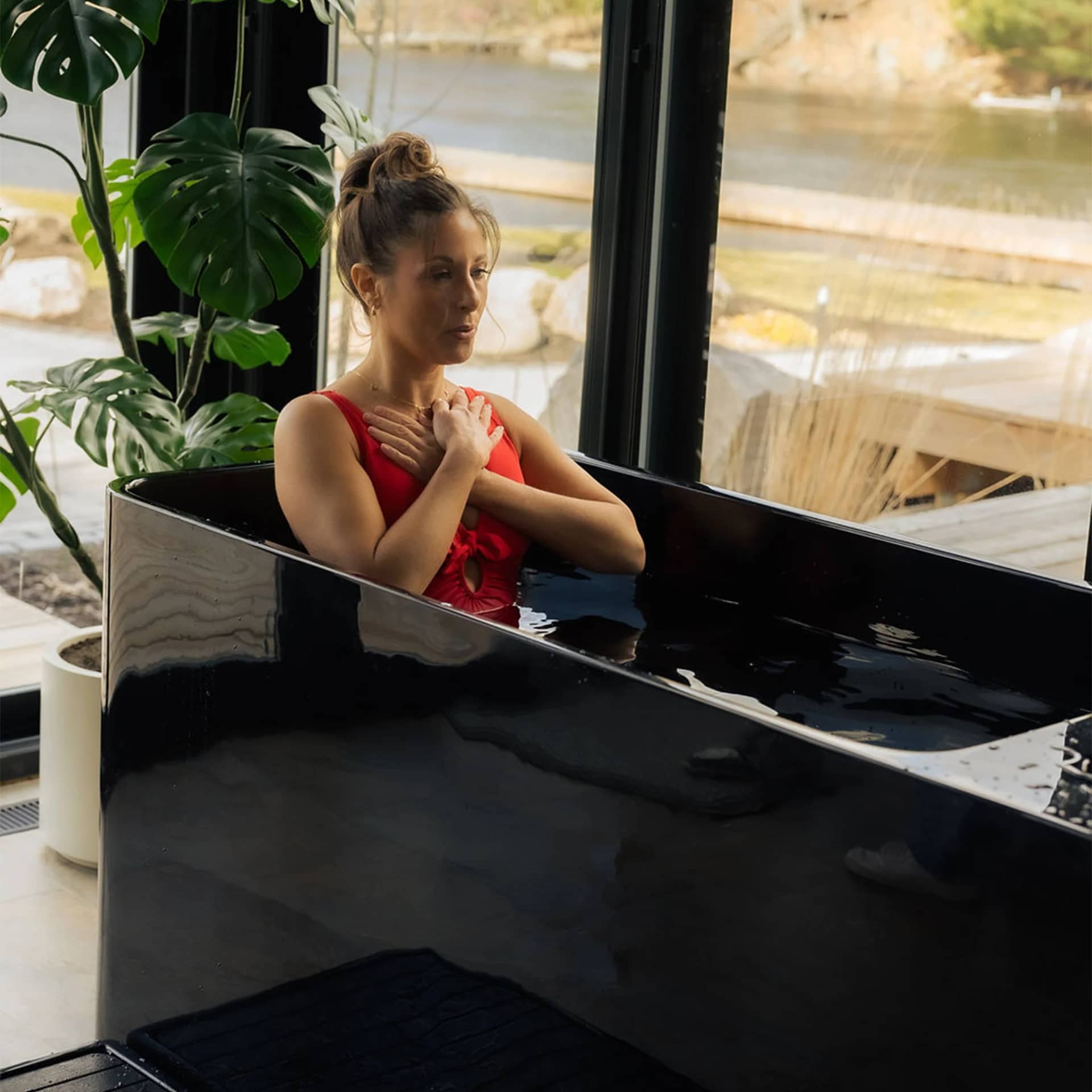
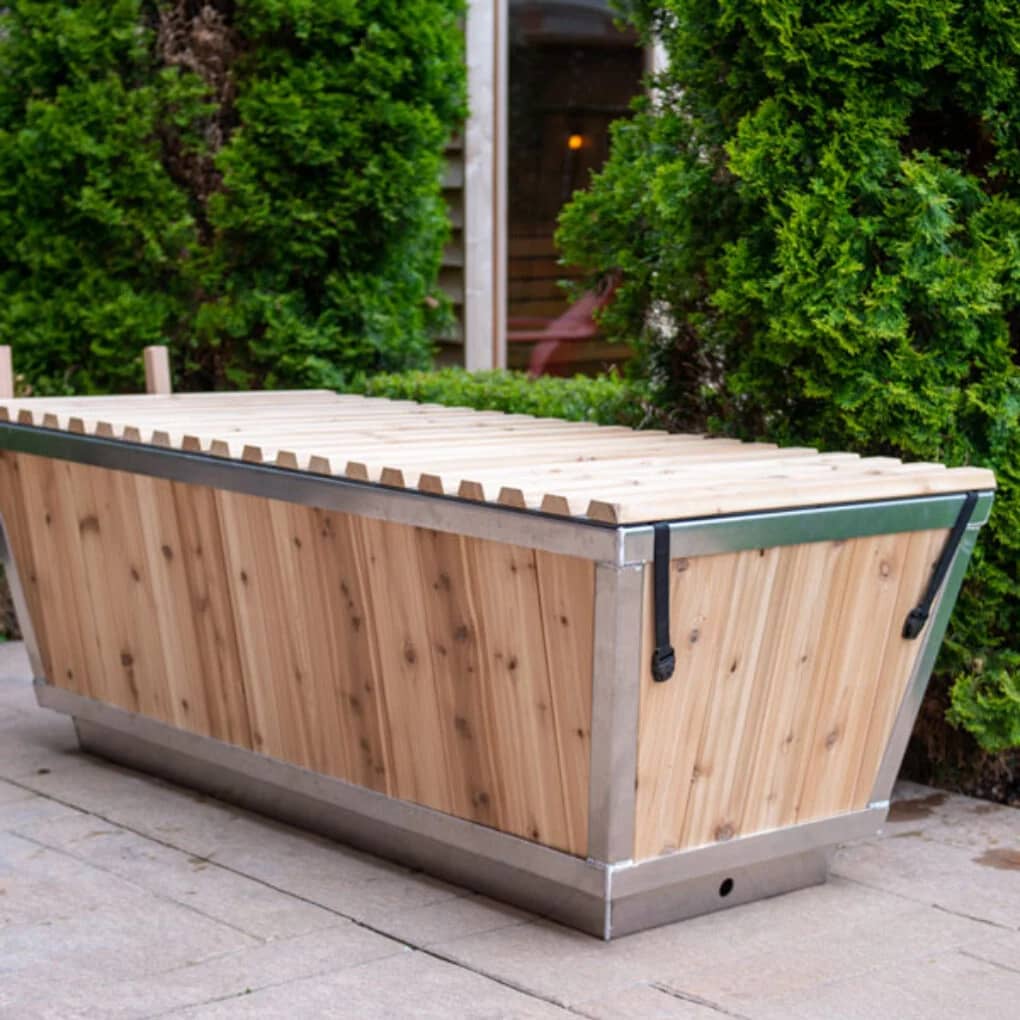
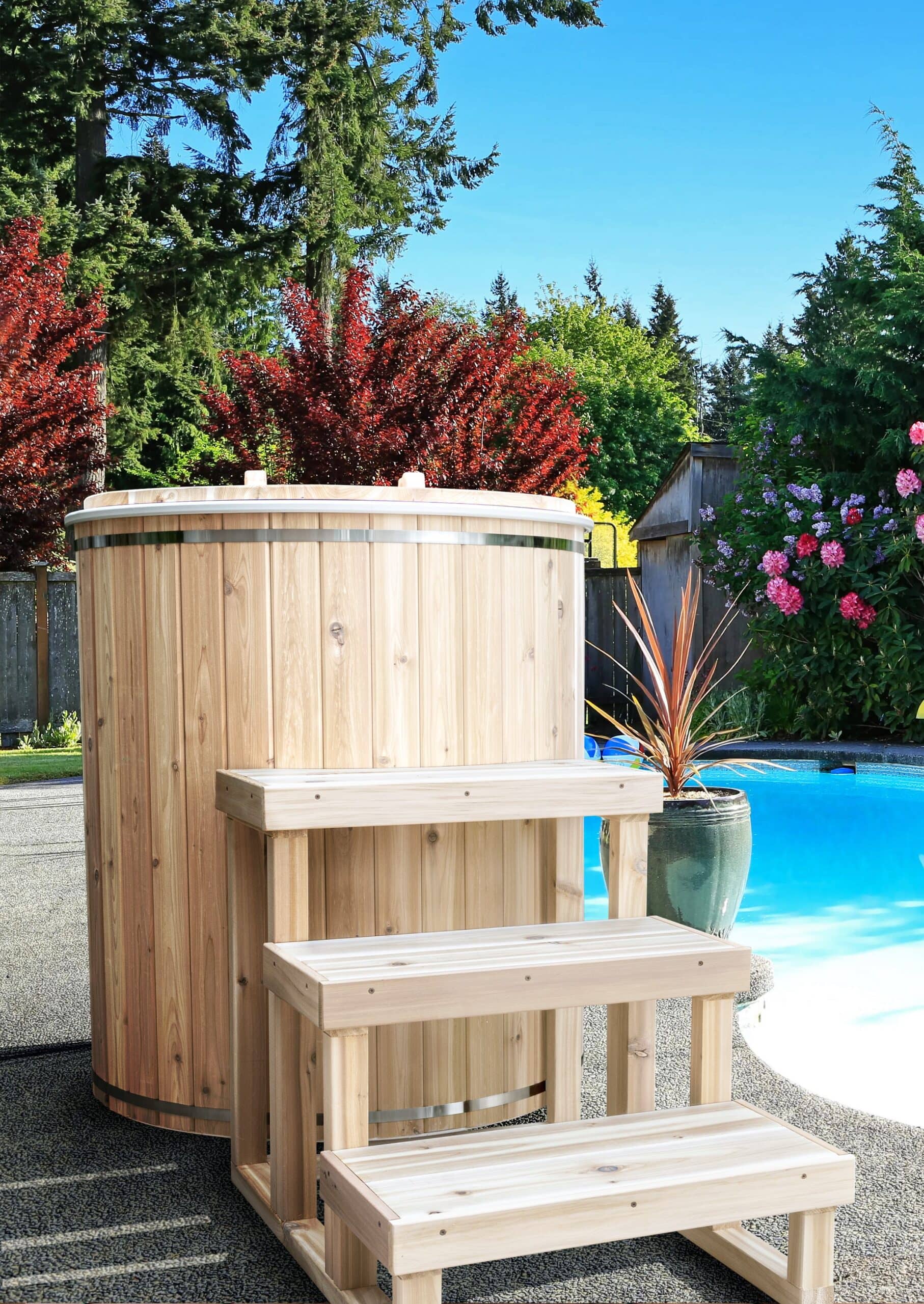
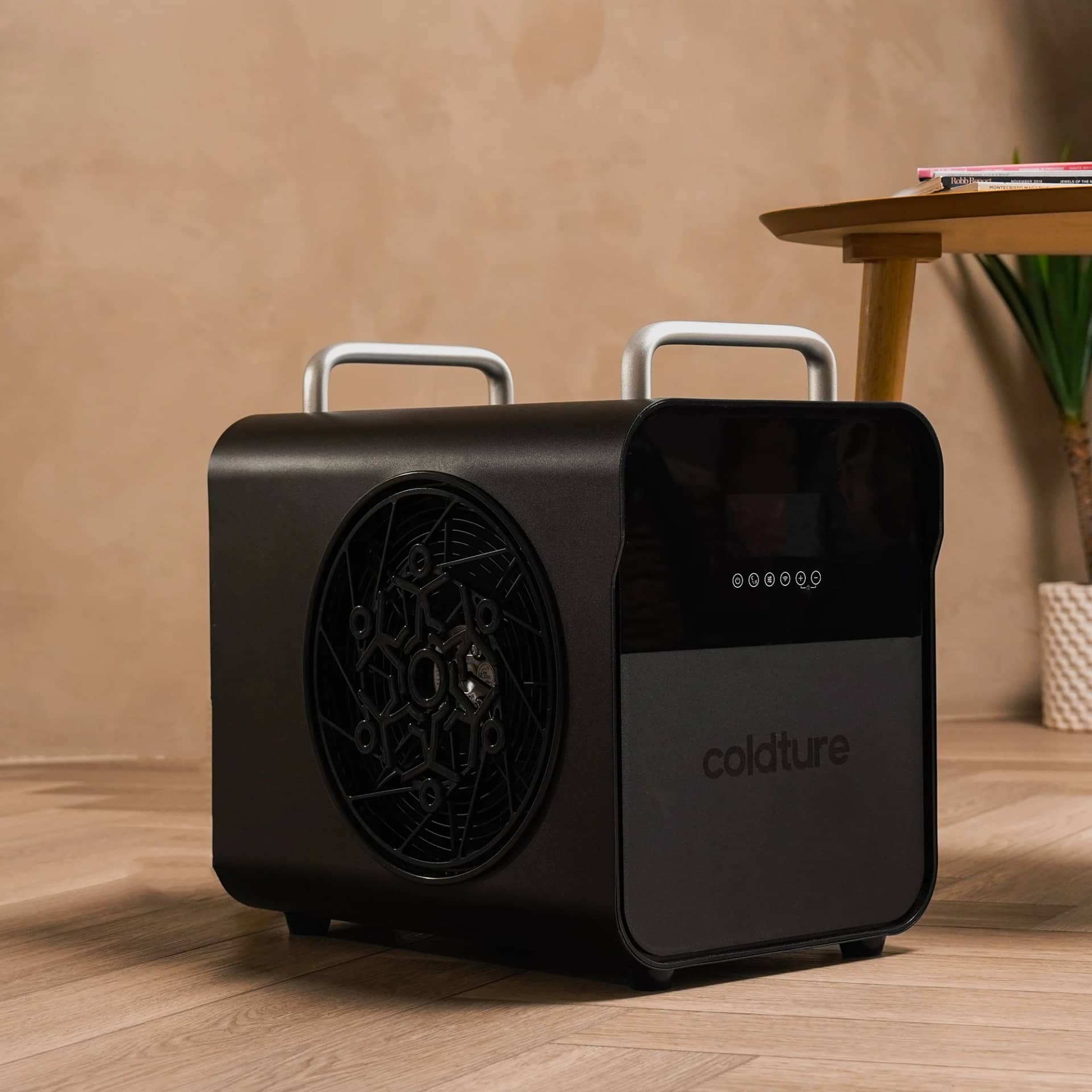
A cold plunge is a reasonable thing to enjoy for how it feels, as long as you keep it safe and your expectations modest. Our cold plunge buying guide compares the four plunge products we sell: the indoor all-in-one Coldture PRO Plunge, the cedar Polar Plunge and Baltic tubs, and the Coldture PRO Water Chiller for a tub you already have. Or browse all cold plunges.
The evidence, claim by claim
Scroll the table sideways to see every column.
| Claim | What the research found | Our reading | Source |
|---|---|---|---|
| Less muscle soreness | Less soreness 24–96 h after exercise than resting; no clear difference from warm water | Some evidence, low quality | Cochrane 2012 |
| Faster recovery after hard exercise | Better power, less soreness and lower creatine kinase at 24 h; strength recovery unchanged | Some evidence | Moore 2022 |
| Strength and muscle gains | Regular plunges after strength training reduced strength gains | A trade-off | Malta 2021 |
| Less stress | Lower 12 h after; no change immediately or at 1, 24 or 48 h | Limited | Cain 2025 |
| Better mood | No difference in a randomized trial | Not shown | Cain 2025 |
| Better sleep | Better in one small study of men | Too little to say | Cain 2025 |
| Stronger immunity | No change in immune markers; fewer sick-leave days with cold showers, but no fewer days ill | Not shown | Cain 2025 |
| Less inflammation | Inflammation markers rose in the first hour | Not supported | Cain 2025 |
| Weight loss, brown fat | Metabolic rate rises during immersion; brown-fat findings mostly in rodents | Not shown in people | Šrámek 2000; Mayo Clinic Press |
| Heart health | No benefit shown; not advisable with heart disease or rhythm problems | Caution | Harvard Health |
Questions
Are cold plunge benefits proven?
Only one is reasonably supported: less muscle soreness in the days after hard exercise, and even that rests on small, low-quality trials. Claims about immunity, mood, sleep, weight loss and heart health aren't proven in people.
How long should you stay in a cold plunge?
There's no agreed time. Leisurecraft's Polar Plunge manual says 5 minutes or less, and a 2022 British Journal of Sports Medicine article suggests staying under 10 minutes in colder water. Start short, never judge by how cold you feel, and never plunge alone.
What temperature should a cold plunge be?
The trials in a 2025 review used 7–15 °C. Chillers can go down to about 3 °C, but colder hasn't been shown to work better, and the cold shock response is strong even at 10–15 °C.
Should I cold plunge after a workout?
After hard exercise it may reduce soreness over the next few days. After strength training, regular plunges may reduce strength gains, so if building strength is your goal, consider plunging at a different time and ask a coach or physiotherapist.
Do cold plunges help with anxiety or depression?
That hasn't been shown. A 2025 review found less reported stress 12 hours after a plunge but no change at other times, and no difference in mood in a randomized trial. If you live with a mental-health condition, talk to your doctor.
Can I cold plunge while pregnant?
We found little research on cold plunging in pregnancy, so we can't say it's safe. Ask your doctor or midwife before you try it.
Does cold plunging help you lose weight?
There's no good evidence that it does. Metabolic rate rises while you're in cold water, and brown-fat findings come mostly from animal studies, but neither has been shown to lead to weight loss in people.
Is it safe to cold plunge after a sauna?
Research has mostly tested cold water on its own. If you alternate, follow the same safety rules for each dip, skip alcohol, and get medical advice first if you have a heart condition or high blood pressure.
Is a cold plunge better than a cold shower?
Nobody has compared them properly. Most trials used immersion; one large trial used showers. A shower is cheaper and easier to stop; a plunge gives you a set temperature and time.
Shop cold plunge tubs & chillers
Sources
- Cain T et al. 2025. Effects of cold-water immersion on health and wellbeing: systematic review and meta-analysis. PLoS One
- Bleakley C et al. 2012. Cold-water immersion for preventing and treating muscle soreness after exercise. Cochrane Database of Systematic Reviews
- Moore E et al. 2022. Impact of cold-water immersion compared with passive recovery following a single bout of strenuous exercise. Sports Medicine
- Malta ES et al. 2021. The effects of regular cold-water immersion use on training-induced changes in strength and endurance performance. Sports Medicine
- Šrámek P et al. 2000. Human physiological responses to immersion into water of different temperatures. European Journal of Applied Physiology
- Tipton MJ et al. 2017. Cold water immersion: kill or cure? Experimental Physiology
- Shattock MJ, Tipton MJ. 2012. Autonomic conflict: a different way to die during cold water immersion? Journal of Physiology
- Cold water therapies: minimising risks. British Journal of Sports Medicine, 2022
- Canadian Safe Boating Council: the 1-10-1 principle
- Harvard Health: cold plunges and your heart; health benefits from cold-water immersions
- Mayo Clinic Press: the science behind ice baths for recovery
- Leisurecraft Polar Plunge manual