Pick infrared if you want a cabin for indoors that runs on a 120 V circuit, costs less to buy (CA$2,696.40 to CA$4,140 in our range) and heats the air to about 50–60 °C. Pick traditional if you want air at 80 °C or more, steam from water on the stones, a building that stands outside through a Canadian winter, or room for four to six people. Infrared is cheaper to buy and to run; no trial we found shows that either type is healthier than the other.
This guide compares the two on what you can check: how they heat, what wiring they need, what they cost per session at real provincial electricity prices, where they can go, and what the research does and does not say.
Infrared vs regular sauna: how each one heats
A traditional sauna heats the air. An electric or wood heater warms a load of stones, and the stones warm the room. Finnish-style saunas typically run at 80–100 °C (176–212 °F), according to a 2018 review in Mayo Clinic Proceedings. Ladle water on the stones and the humidity rises in a burst of steam. Leisurecraft says most electric heaters bring a room to bathing temperature in 30 to 45 minutes, depending on its size and the weather outside.
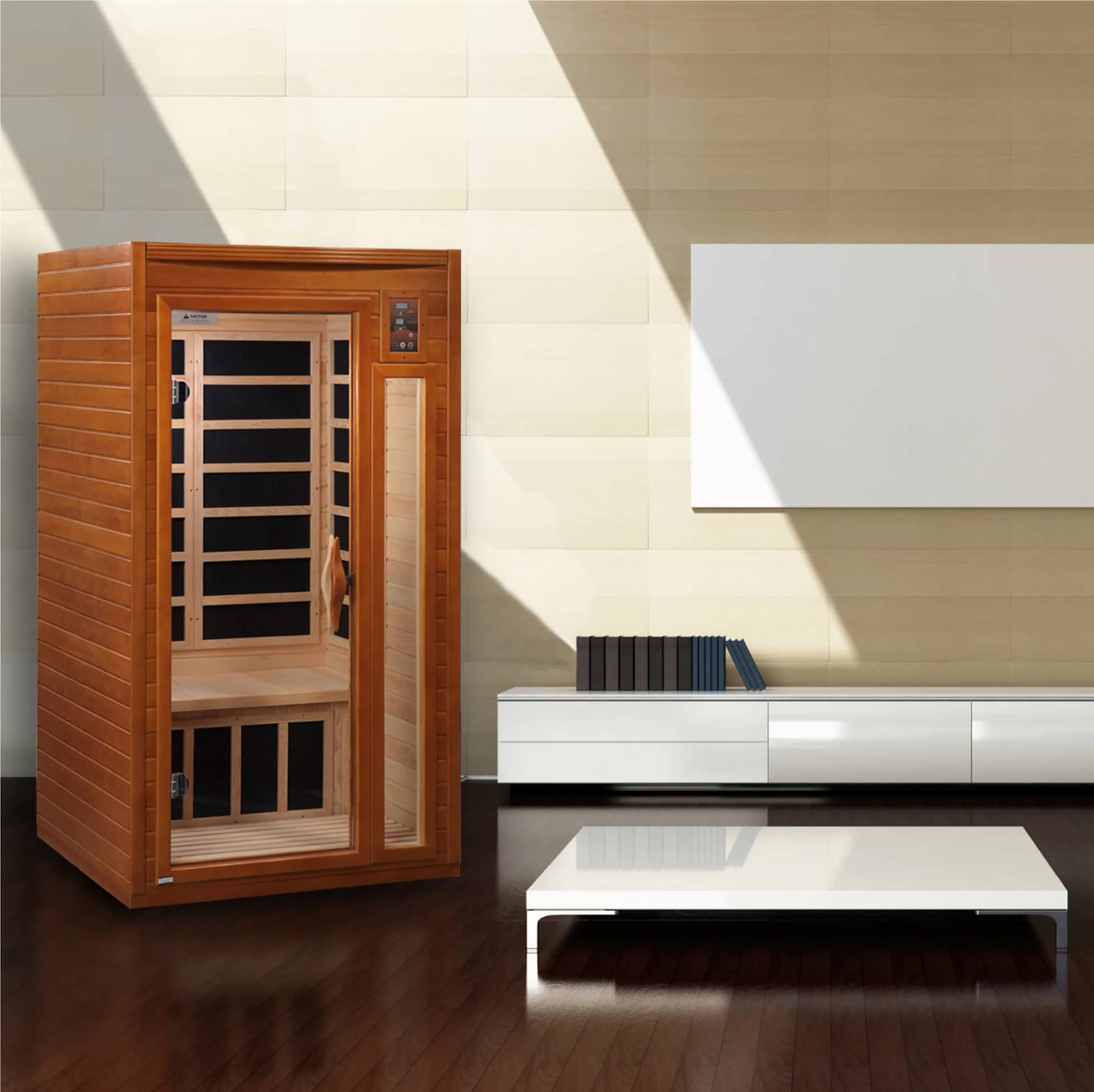
An infrared sauna uses heating panels that give off infrared radiation. The panels warm you and the surfaces they face, and the air stays cooler. For the Dynamic Barcelona, the maker gives an ideal range of 48–56 °C (118–132 °F) and a maximum of 60 °C (140 °F). It takes 25 to 30 minutes to reach about 46–49 °C (115–120 °F) from a 21 °C room. There are no stones, so there is no steam.
What each needs from your electrical panel
This is the difference most buyers miss, and it changes the installation cost.
- Infrared cabins in our range run on 120 V. The Barcelona and the Maxxus Seattle need a dedicated 15 A circuit; the Maxxus Bellevue needs a dedicated 20 A circuit. The makers say no GFCI for the Barcelona and Bellevue, and no extension cord or adapter for the Seattle. If a free dedicated outlet sits near the spot, you plug in.
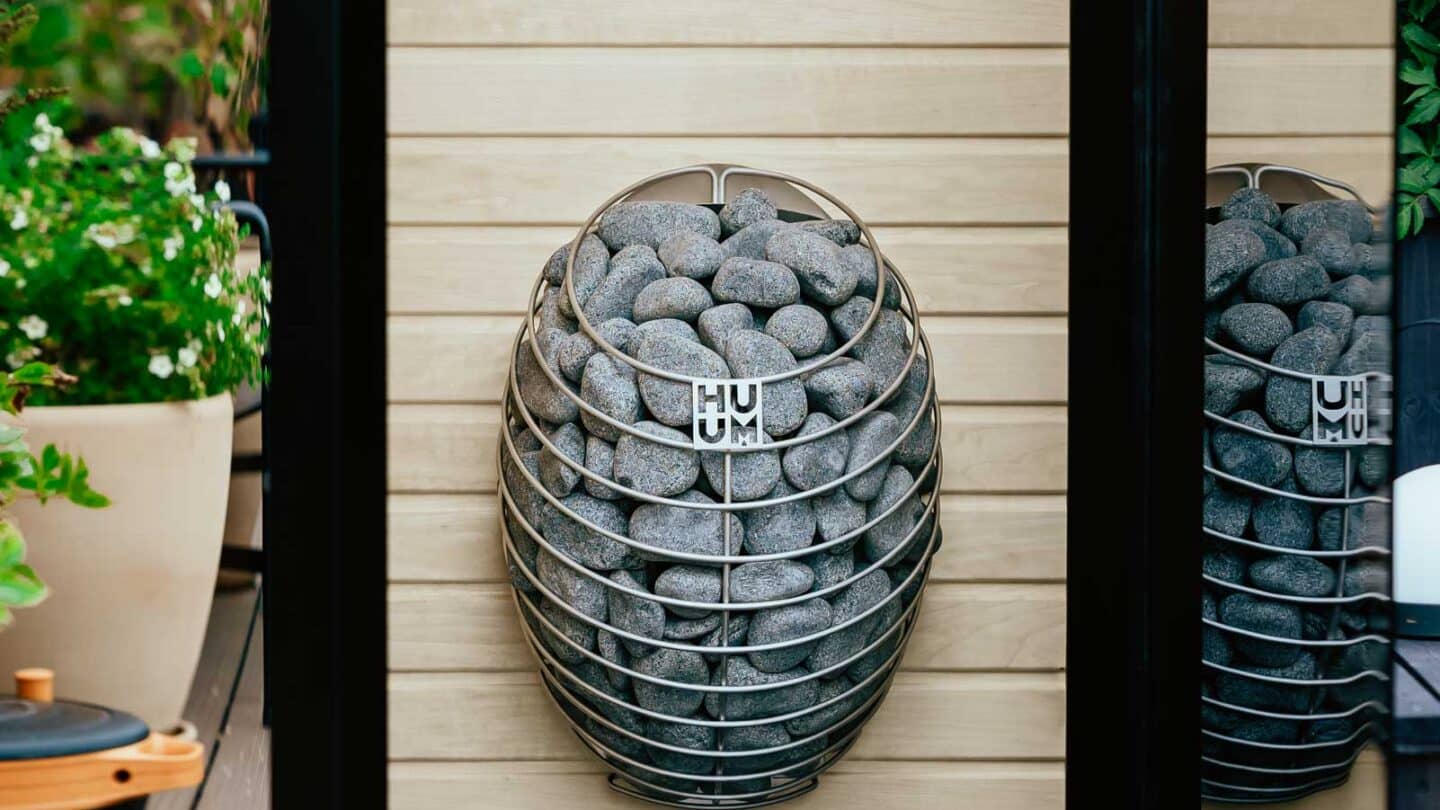
- Traditional electric heaters run on 240 V. The HUUM DROP needs a 30 A breaker at 4.5 or 6 kW, 40 A at 7.5 kW and 50 A at 9 kW. Leisurecraft says a licensed electrician must connect the heater, and the work needs an electrical permit or notification.
None of the three infrared makers publishes the cabin's wattage. A 15 A, 120 V circuit cannot supply more than 1.8 kW, and a 20 A circuit no more than 2.4 kW, so we use those as ceilings below. Breakers and wire for heaters are in the sauna electrical requirements guide.
What each costs to buy
Infrared cabins come complete. In our range of infrared saunas:
- Barcelona, 1–2 people: CA$2,696.40.
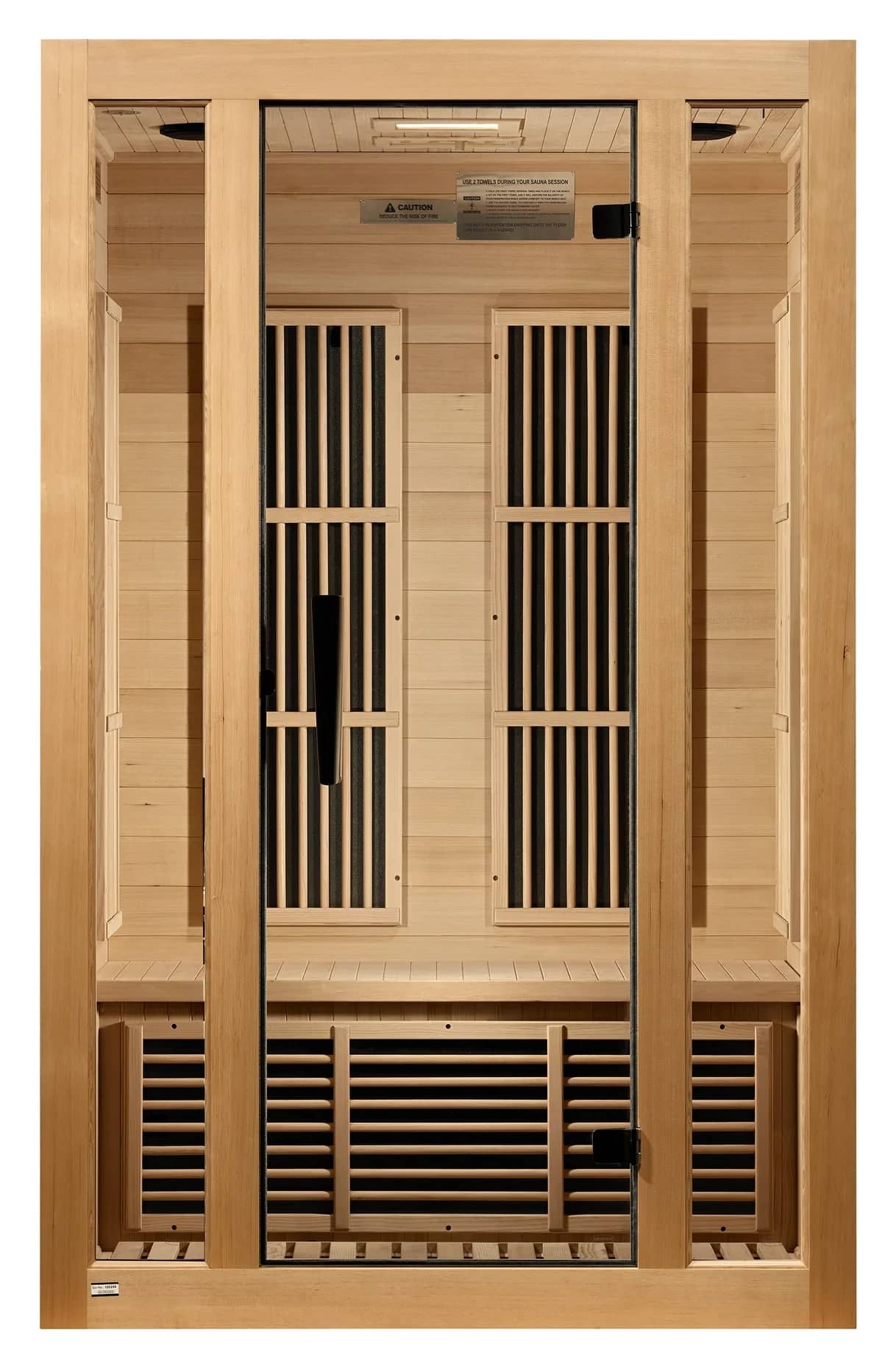
- Seattle, 2 people: CA$3,600.
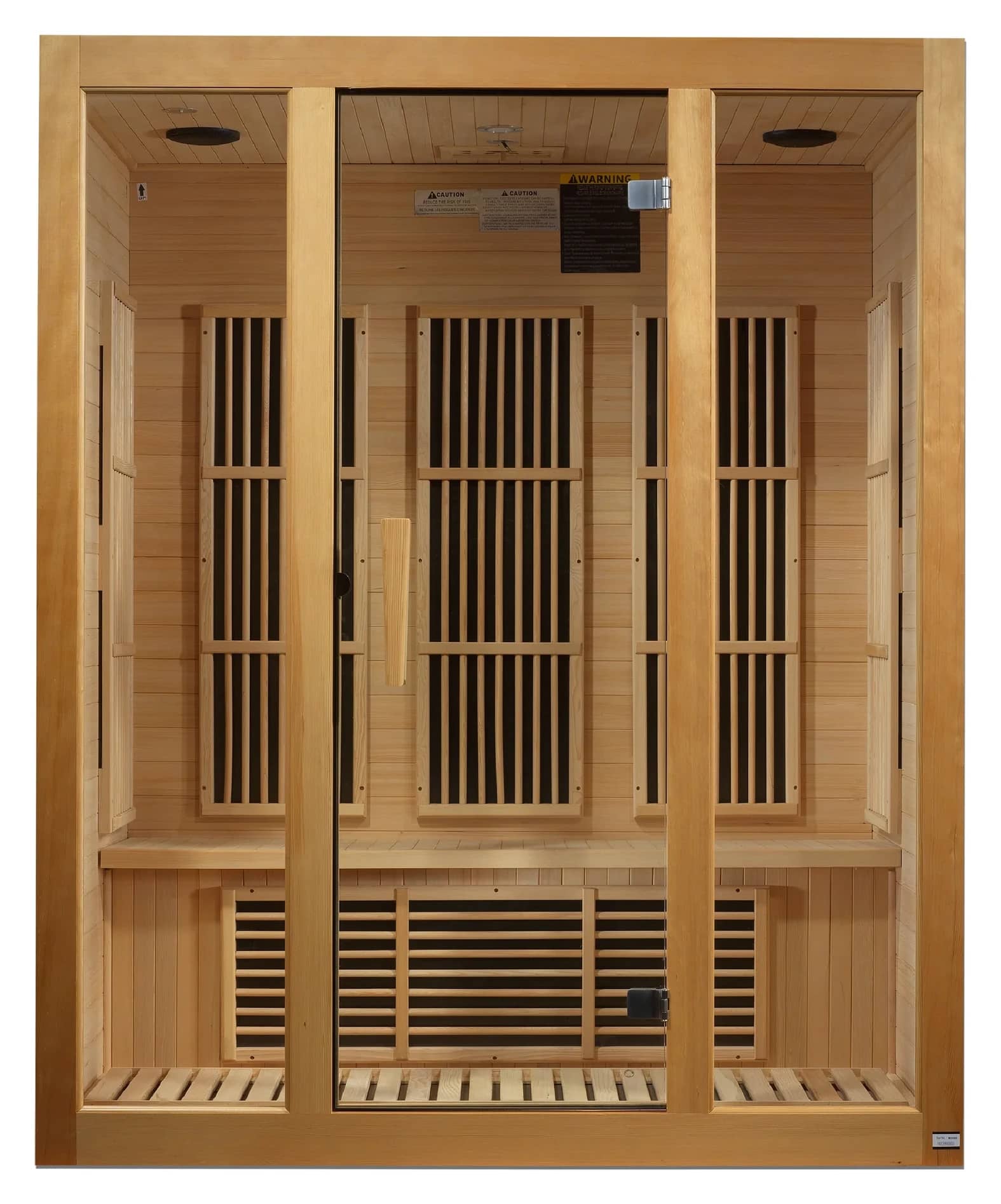
- Bellevue, 3 people: CA$4,140.
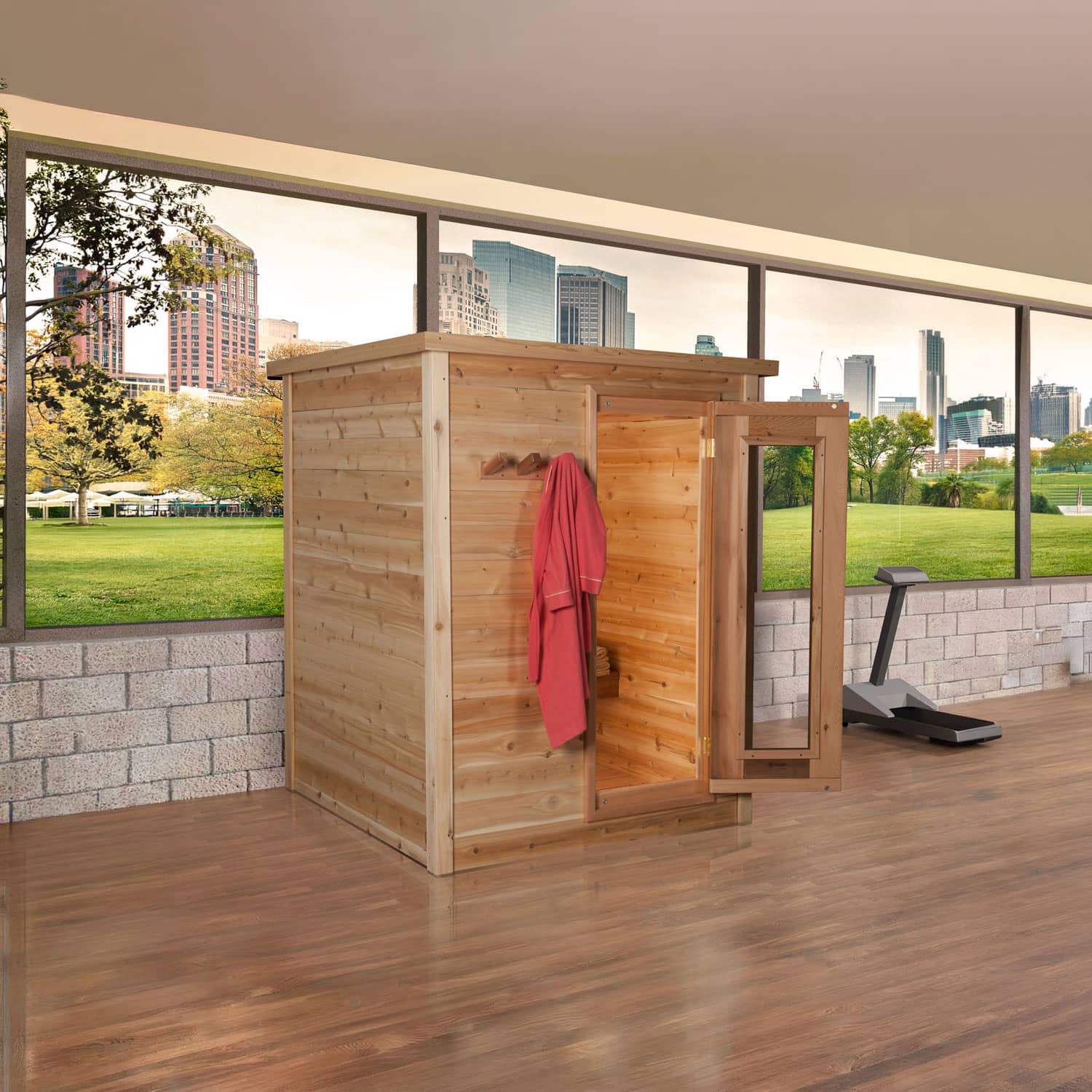
A traditional sauna is a room plus a heater, a control and stones, bought separately. The smallest traditional room we sell, the 2-person indoor cabin, is CA$7,274.70, or about CA$9,856 with a 4.5 kW HUUM DROP, its UKU Local control and stones. The 4-seat Harmony barrel is CA$6,187.50, or about CA$8,935 with a 6 kW kit. Then add the 240 V circuit. Every line is priced in how much does a sauna cost in Canada.
Cost per session at Canadian electricity prices
Harvia says a 6 kW heater uses about 7–9 kWh for an hour of heating and an hour of bathing in a well-insulated room. For infrared, we take the circuit ceiling: at most 1.8 kWh for an hour of running on a 15 A cabin, or 2.4 kWh on the 20 A Bellevue. Real use is lower, because no cabin draws the full circuit.
Using energy prices only (delivery, regulatory charges and tax are extra):
- Ontario, off-peak 9.1¢: traditional CA$0.64–$0.82; infrared up to CA$0.16.
- Ontario, on-peak 18.9¢: traditional CA$1.32–$1.70; infrared up to CA$0.34.
- Quebec, first 40 kWh a day at 7.065¢: traditional CA$0.49–$0.64; infrared up to CA$0.13.
- BC Hydro, step 1 at 11.87¢: traditional CA$0.83–$1.07; infrared up to CA$0.21.
- Alberta, Rate of Last Resort at about 12¢: traditional CA$0.84–$1.09; infrared up to CA$0.22.
The full table, with Ontario's ultra-low overnight price and the higher tiers, is at the end of this guide. In Quebec, use the higher figure on days your home has already used 40 kWh, which an electrically heated house can pass on a cold day. An outdoor sauna in January also uses more than Harvia's figure, because the room starts colder; we found no measurement of how much more.
Indoors, outdoors and Canadian winters
The infrared cabins we sell are for indoor use only. The Barcelona maker advises against using it where the room is below 16 °C (60 °F), which rules out an unheated garage or porch for much of the year in most of Canada.
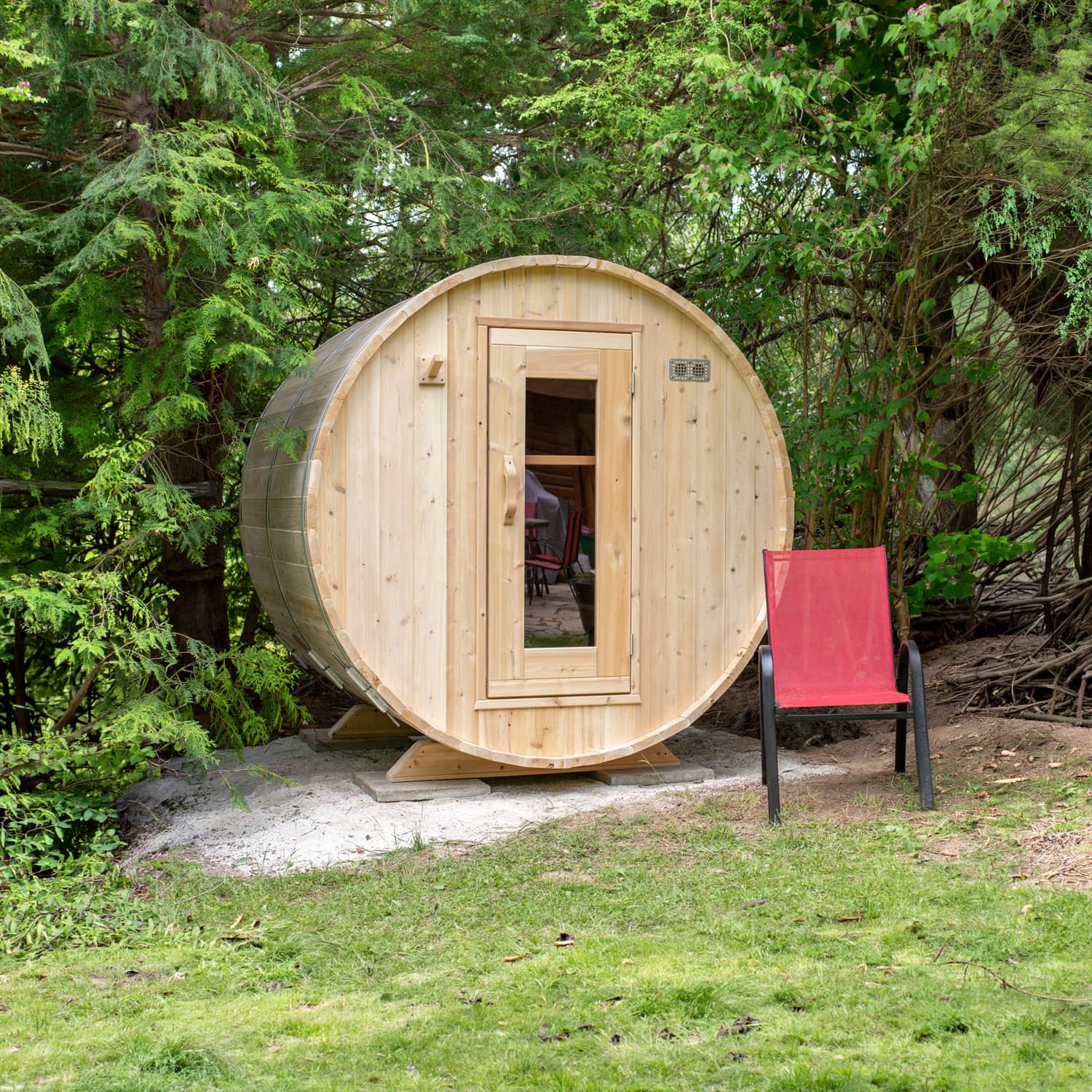
Traditional saunas come in both forms. Leisurecraft says its outdoor saunas are designed for year-round use, including Canadian winters, as long as you clear heavy snow from the roof, keep vents clear and keep ventilating after each use. It does not publish a snow-load rating for any model. Outdoor rooms include the barrel saunas and the cabin, pod and cube in outdoor saunas; most can take a wood stove where there is no power.
Heat, steam and how it feels
The two make different rooms, and the choice is partly taste:
- Air temperature. About 50–60 °C in the Barcelona against 80–100 °C in a Finnish-style sauna.
- Humidity. You control it in a traditional sauna by ladling water on the stones. An infrared cabin has no stones and stays dry.
- Benches. Traditional cabins such as the Georgian have two tiers, so you can sit higher for more heat; barrel saunas have a single level.
- Warm-up. About 25–30 minutes for the Barcelona to reach the mid-40s °C; 30–45 minutes for most electric heaters to reach bathing temperature, per Leisurecraft.
If you grew up with a Finnish or Russian sauna and want steam, infrared will feel like a different thing. If you want warmth in a spare room with no wiring job, it may be all you need.
What the research says, and what it doesn't
Most long-term evidence comes from traditional Finnish saunas, not infrared cabins:
- A Finnish study of 2,315 middle-aged men followed for about 20 years found that more frequent sauna bathing was associated with lower rates of fatal cardiovascular events and death from any cause (JAMA Internal Medicine, 2015). It was observational, so it shows an association, not cause and effect.
- A 2018 review in Mayo Clinic Proceedings by the same research group summarised this work on saunas at 80–100 °C and called for randomised trials. It notes that people with unstable heart conditions should avoid saunas.
- A 2009 review in Canadian Family Physician looked at infrared saunas and found only a small number of limited studies and called for larger, better-quality trials.
- A 2018 systematic review of regular dry sauna bathing found too little evidence to say which type or routine is better, reported only minor side effects, and noted a reversible effect on sperm in men.
We found no trial that compares infrared and traditional saunas head to head. So we don't claim one is healthier. Choose on heat, space, wiring and price, and ask your doctor about anything medical.
Pros and cons at a glance
Infrared, pros
- Lower price: CA$2,696.40 to CA$4,140, heater included.
- Runs on a dedicated 120 V circuit; often no 240 V work.
- Low running cost: at most CA$0.13 to CA$0.34 an hour on the rates above.
- Fits indoors in a basement or spare room.
Infrared, cons
- Air tops out around 60 °C; no steam.
- Indoor only; not for rooms below 16 °C.
- Wattage not published by these makers.
Traditional, pros
- Hotter air, steam on demand, two-tier benches in cabins.
- Indoor or outdoor; the maker says its outdoor rooms are for year-round use.
- Seats up to six in our range; wood heat possible where there is no power.
Traditional, cons
- Costs CA$8,900 or more once the heater is added, against CA$4,140 or less for infrared.
- Needs its own circuit (240 V for almost every heater), an electrician and a permit, or a chimney for wood.
- Uses more energy: roughly CA$0.49 to CA$1.70 per session on the rates above.
Safety
Both types put heat stress on the body. Skip the sauna after alcohol, start with short sessions and drink water. If you are pregnant, have a heart condition or another medical condition, or take medication that affects blood pressure, talk to your doctor first. Follow the maker's limits for temperature and session length.
Comparison tables
Infrared and traditional models compared
Scroll the table sideways to see every column.
| Model | Type | Seats | Power | Where it goes | Price (CA$) |
|---|---|---|---|---|---|
| Dynamic Barcelona | Infrared, 6 carbon panels | 1–2 | 120 V, 15 A dedicated | Indoors, room 16 °C or warmer | 2,996 |
| Maxxus Seattle | Infrared, 6 panels + floor heater | 2 | 120 V, 15 A dedicated | Indoors | 4,000 |
| Maxxus Bellevue | Infrared, 7 panels | 3 | 120 V, 20 A dedicated | Indoors | 4,600 |
| Indoor cabin 4 × 6 ft | Traditional, electric | 2 | 240 V, 30 A (4.5 kW) | Indoors | 8,083 (about 10,951 with heater kit) |
| Canadian Timber Harmony | Traditional barrel, electric or wood | 4 | 240 V, 30 A (6 kW) or wood | Outdoors, year-round | 6,875 (about 9,928 with heater kit) |
| Canadian Timber MiniPOD | Traditional pod, electric or wood | 4 | 240 V, 40 A (7.5 kW) or wood | Outdoors, year-round | 6,897 (about 10,125 with heater kit) |
Energy cost per session by province
Scroll the table sideways to see every column.
| Rate | Price per kWh | Traditional, 6 kW | Infrared, 15 A cabin |
|---|---|---|---|
| Quebec, Rate D, first 40 kWh a day | 7.065¢ | $0.49–$0.64 | up to $0.13 |
| Quebec, Rate D, above 40 kWh a day | 11.142¢ | $0.78–$1.00 | up to $0.20 |
| Ontario, time-of-use off-peak | 9.1¢ | $0.64–$0.82 | up to $0.16 |
| Ontario, time-of-use mid-peak | 14.6¢ | $1.02–$1.31 | up to $0.26 |
| Ontario, time-of-use on-peak | 18.9¢ | $1.32–$1.70 | up to $0.34 |
| Ontario, ultra-low overnight | 3.7¢ | $0.26–$0.33 | up to $0.07 |
| Ontario, ultra-low on-peak (4–9 p.m.) | 37.7¢ | $2.64–$3.39 | up to $0.68 |
| Ontario, tiered | 11.2–13.2¢ | $0.78–$1.19 | up to $0.24 |
| BC Hydro, step 1 | 11.87¢ | $0.83–$1.07 | up to $0.21 |
| BC Hydro, step 2 | 14.08¢ | $0.99–$1.27 | up to $0.25 |
| Alberta, Rate of Last Resort | 12.01–12.06¢ | $0.84–$1.09 | up to $0.22 |
Questions
Is an infrared or traditional sauna better?
Neither is better for everyone. Infrared is cheaper, plugs into a 120 V circuit and suits indoor rooms. Traditional is hotter, gives you steam, works outdoors in winter and seats more people. No trial we found shows one is healthier.
Are infrared saunas as good as traditional saunas?
They do a different job. Infrared cabins heat the air to about 50–60 °C; traditional saunas run at 80 °C or more with steam. Most long-term health research was done on traditional Finnish saunas, and we found no head-to-head trial.
Are infrared or traditional saunas more expensive?
Traditional saunas cost more to buy and to run. In our range, infrared cabins are CA$2,696.40 to CA$4,140 complete, while a traditional room with a heater kit starts around CA$8,935, before the 240 V circuit.
Can an infrared sauna go outside or in a garage?
Not the ones we sell. They are for indoor use, and the Barcelona maker advises against rooms below 16 °C (60 °F). For outdoors, choose a traditional barrel, cabin, pod or cube.
Does an infrared sauna need an electrician?
Only if you don't already have a free dedicated circuit of the right size near the spot: 15 A at 120 V for the Barcelona and Seattle, 20 A for the Bellevue. A traditional heater always needs an electrician and its own circuit, 240 V for almost every heater.
How hot does an infrared sauna get compared with a traditional one?
The Barcelona's maker gives an ideal of 48–56 °C (118–132 °F) and a maximum of 60 °C (140 °F). Finnish-style traditional saunas typically run at 80–100 °C (176–212 °F).
What does an infrared sauna cost to run per session?
At most about CA$0.13 to CA$0.34 for an hour on a 15 A cabin at Quebec, Ontario, BC or Alberta energy prices, because the circuit caps the draw at 1.8 kW. A 6 kW traditional heater costs about CA$0.49 to CA$1.70 a session on the same rates.
Sources
Product details and electrical requirements come from the makers, and prices from our product pages (November 2026).
- Laukkanen T. et al., Association between sauna bathing and fatal cardiovascular and all-cause mortality events, JAMA Internal Medicine, 2015.
- Laukkanen J.A., Laukkanen T., Kunutsor S.K., Cardiovascular and other health benefits of sauna bathing, Mayo Clinic Proceedings, 2018.
- Beever R., Infrared saunas for treatment of cardiovascular risk factors, Canadian Family Physician, 2009.
- Hussain J., Cohen M., Clinical effects of regular dry sauna bathing: a systematic review, 2018.
- Harvia, energy use of sauna bathing.
- Energy prices: Ontario Energy Board (from Nov. 1, 2026), Hydro-Québec Rate D (from Apr. 1, 2026), BC Hydro (from July 1, 2026), Alberta Utilities Consumer Advocate.